If you wake up at 5:30 AM to run in Mumbai, Delhi, or Bengaluru, you know the feeling. The streets are quiet, the air is relatively cool, and it is just you, the occasional stray dog, and the asphalt.
It feels lonely. It feels like you are the only one fighting this battle.
But here is the truth: you are not alone. Ten minutes before you, someone ran the exact same stretch of road. Two blocks away, a small walking group is logging their morning steps. On the parallel avenue, a cyclist is pushing through their intervals.
Our neighborhoods are filled with active people. The problem is that we are invisible to each other.
Why does urban running in India feel so isolating?
Running in an Indian city is a unique challenge. Unlike western cities with wide sidewalks, extensive parks, and dedicated bike paths, runners in India must navigate a chaotic landscape of traffic, construction, and uneven terrain.
Because of this, we tend to put our heads down, plug in our earbuds, and focus entirely on survival. We retreat into our private worlds. We track our workouts on private apps, looking at our screens instead of our surroundings.
This isolation takes a toll. Without a sense of shared effort, exercise feels like an uphill struggle against the city. We miss out on the collective energy that makes communities thrive. We run the same paths, pass the same landmarks, but never connect.
How can we reveal the hidden community on our streets?
The solution isn't to force everyone into structured running clubs. Many of us prefer the flexibility of solo runs—running on our own schedules, at our own paces.
Instead, we need to reveal the ambient community that already exists.
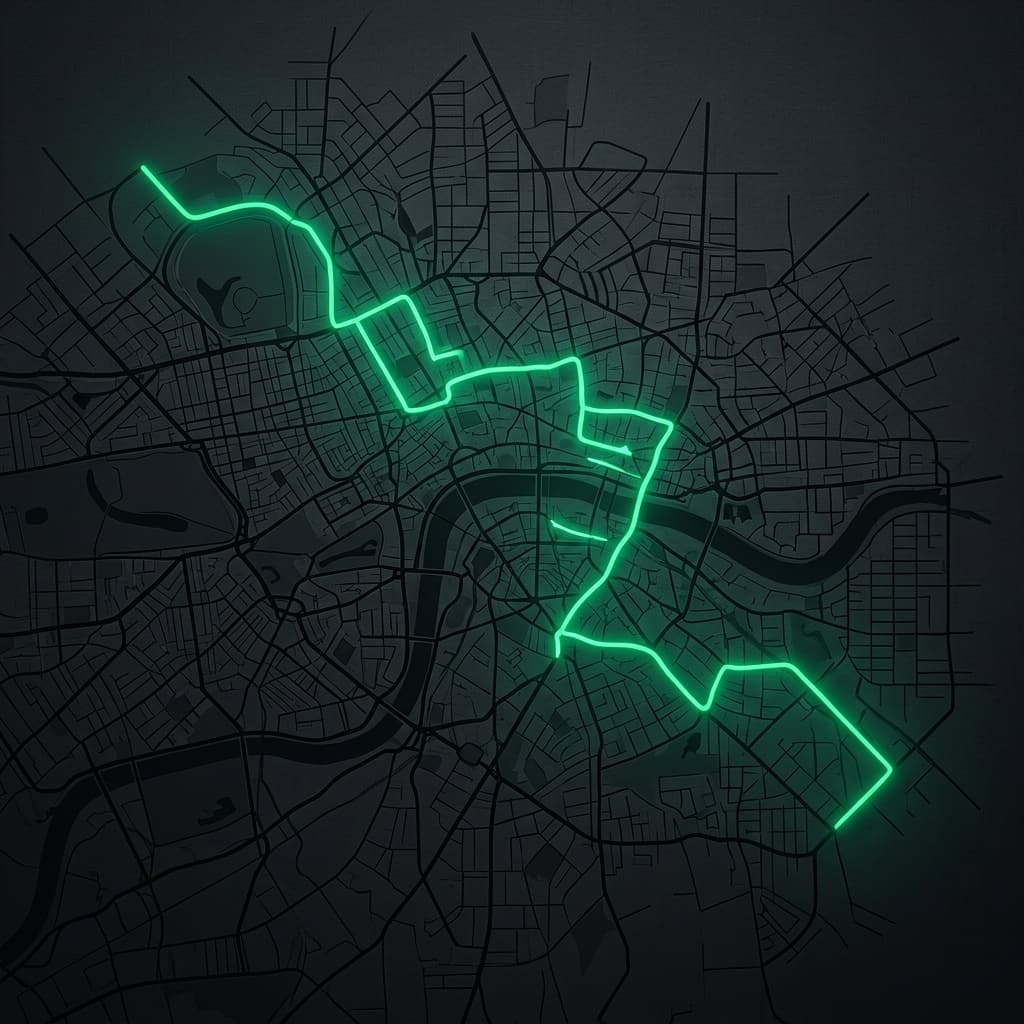
Imagine if your morning loop left a visible, glowing trail on a live neighborhood map. As other runners, walkers, and cyclists move, their paths also glow. When you open your map before a run, you don't just see streets; you see a living, breathing grid of activity.
You can see that Shivaji Park is lighting up, or that Marina Beach has a high concentration of active trails. You realize that you are part of a massive, synchronized effort. Your solo run becomes a contribution to your neighborhood's active footprint.
Why do virtual running groups fail to connect local neighborhoods?
There is no shortage of online running groups, Facebook communities, and corporate step challenges. But these virtual spaces fail to build real, local consistency for a simple reason: they lack physical context.
A leaderboard showing that someone in another country or another city ran 50 kilometers this week does nothing to make your local streets feel safer or more welcoming. It doesn't tell you if Juhu is active at 9 PM, or if Bandra has a group running tomorrow morning.
Real community is local. It is anchored to the parks we run in, the loops we walk, and the streets we navigate. When visibility is localized, it builds trust and safety. It creates a sense of shared ownership over our neighborhood's public spaces.
What happens when we make physical effort visible in real-time?
When we visualize physical effort, we change how we interact with our cities:
- Safety and Comfort: A glowing map of active routes tells you exactly where other people are moving. For women and late-night runners, this real-time visibility provides essential safety data.
- Local Pride: Neighborhoods can see their collective effort. Bandra can compete with Powai in active consistency, not through speed, but through showing up.
- Low-friction Connection: You don't need to coordinate schedules or join formal clubs. You just run whenever you want, knowing you are part of the grid.
At REVO, we are building a system that turns individual runs into a shared, glowing city map. We believe that motivation isn't the problem—invisibility is.
Frequently Asked Questions
Why does running in Indian cities feel so hard?
Urban runners in India face unique environmental barriers, including limited pedestrian infrastructure, traffic, and high temperatures. These factors isolate runners, making consistency harder to maintain.
How does a live city map improve running safety?
A live, ambient map shows active zones in real-time. Knowing that others are walking, running, or cycling on a specific loop helps you choose routes that are active and safe.
Do I need to run in a group to feel part of the community?
No. Ambient visibility allows you to run solo on your own terms while still seeing and contributing to the collective active energy of your neighborhood.
Want to help light up your city's grid? Head over to our homepage and claim your spot on the waitlist.