Every year, millions of people lace up their running shoes with a burst of resolve. They buy the gear, download the apps, and set ambitious goals. Yet, statistics show that the vast majority of these runners will quit within the first six months.
When asked why, most will blame themselves: "I lost my motivation," "I don't have enough willpower," or "I just got lazy."
But as fitness psychologists and behavioral designers, we know this is a misdiagnosis. Motivation is not the problem. Invisibility is.
Why does the initial running high fade so quickly?
When you start a new running routine, you are fueled by an initial spike of dopamine. The anticipation of weight loss, better health, or the thrill of conquering a new challenge gets you out of bed at 5:30 AM. But dopamine is designed to initiate action, not sustain it.
As the initial excitement wears off, running becomes hard. The morning air is cold, your muscles are sore, and the bed feels warm. This is the transition point where motivation must evolve into a habit.
Under the current paradigm, your run is entirely private. You start your tracker, run your loop, hit stop, and save it to a database. Your effort is locked away inside a digital vault, seen only by you and perhaps a few followers on a feed who tap a generic thumbs-up button.
Because your hard work is invisible to the physical world, your brain begins to evaluate the effort as a transaction: Is this physical pain worth the abstract digital stat? When the feedback loop is that dry, the transaction fails, and you quit.
Is tracking stats on fitness apps actually demotivating you?
For years, we’ve been told that tracking metrics—pace, distance, heart rate, and calories—is the key to consistency. But for the average runner, walker, or cyclist, this hyper-focus on data can have a toxic side effect known as the Overjustification Effect.
When you attach an external score to an activity you want to enjoy, your brain starts doing it only for the score. If your pace is slower today, or if you run a shorter distance, you feel like you failed. The fitness tracker turns your morning escape into a second job.
Furthermore, traditional apps are built on competition. They show you leaderboards where elite athletes dominate the top spots. If you are an amateur runner in Mumbai or Delhi, seeing that someone ran your local route at an Olympic pace doesn't motivate you—it highlights your inadequacy.
We don't need more tracking. We need recognition. We need to know that showing up matters, regardless of whether our pace was 5:00/km or 8:30/km.
How does visibility transform fitness from a chore into a habit?
Humans are fundamentally social creatures. We are wired to seek connection and acknowledgment from our tribe. When your physical effort becomes visible to your local neighborhood, it activates a powerful psychological shift: identity reinforcement.
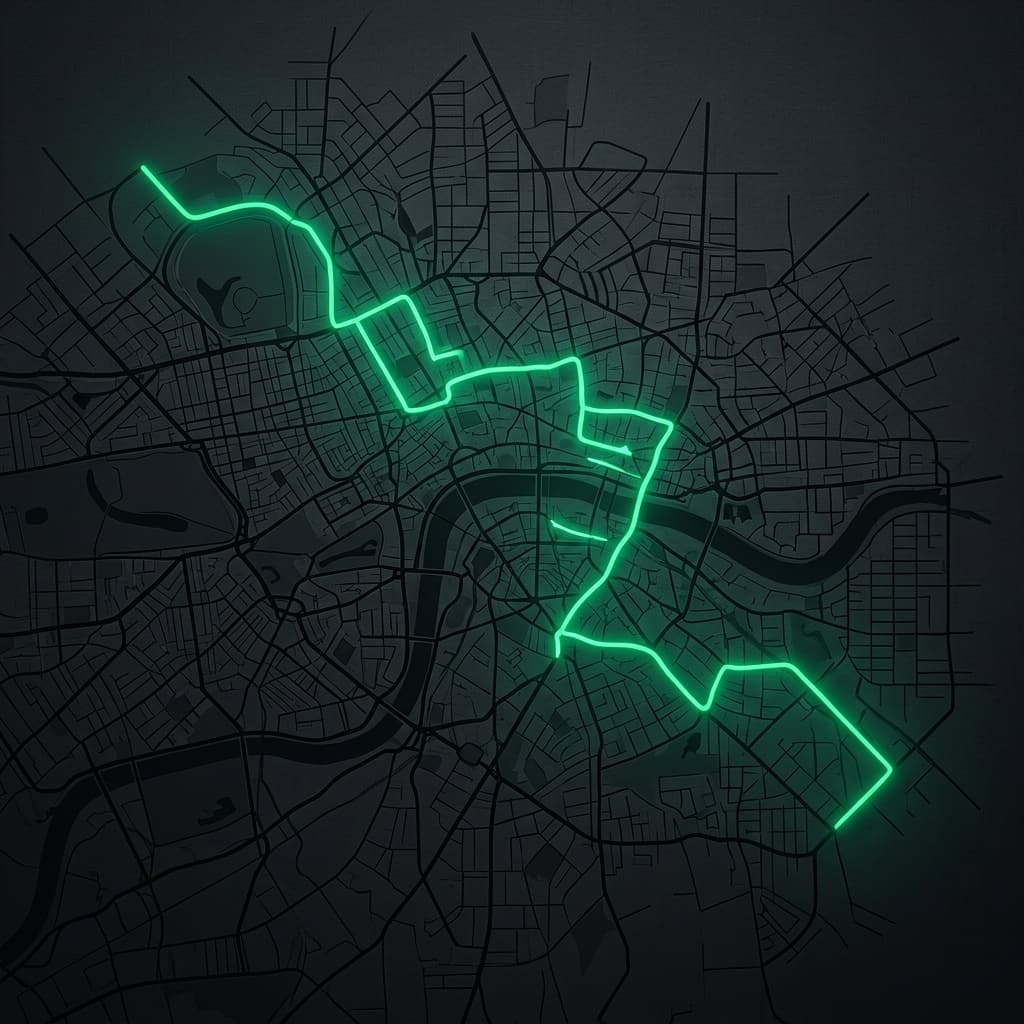
Imagine if every step you took on your morning loop did not just sit in an app, but left a glowing trail on a live map of your community. When you look at the map, you see that you are part of a collective effort. Your neighbors can see that someone is out there active, lighting up the streets.
This visibility converts fitness from a solitary struggle into a shared civic contribution. You aren't just running for calories; you are helping your neighborhood glow brighter on the city grid. You become a "runner" in the eyes of your community, and that identity is the ultimate driver of habit consistency.
This is the core belief of REVO: that making everyday fitness visible builds a culture of consistency over competition.
What are the benefits of community visibility over competition?
Competition only motivates the top 5% of performers. For the remaining 95%, it acts as a barrier. Community visibility, on the other hand, shifts the focus from performance to presence.
- Safety in Numbers: When routes glow with active loops, you know exactly which streets are active, well-lit, and safe for a evening run or walk.
- Ambient Support: Seeing that your neighbors in Juhu or Bandra are out moving creates a sense of shared energy. You are not running alone, even if you are running solo.
- Low-Pressure Consistency: There are no podiums or records to defend. The only goal is to show up, leave your mark, and keep the community active.
If you are looking to build a habit that sticks, stop looking for motivation in private stats. Seek out systems that make your effort visible and connected to the people around you.
Frequently Asked Questions
Why do people quit running after a few weeks?
Most people quit because their effort is invisible. Without external social reinforcement or community connection, the mental cost of physical exertion eventually overrides the abstract desire for long-term health metrics.
Are fitness tracking apps bad for mental health?
Hyper-focusing on data like pace and heart rate can lead to anxiety and burnout. When exercise is reduced to scores and compared on competitive leaderboards, it often strips away the intrinsic joy of movement.
How does community help in building exercise habits?
Communities provide social proof and accountability. Seeing others active in your local area normalizes the behavior, making it easier to integrate running or walking into your daily routine.
Want to experience a new way of moving? Join the waitlist on our homepage and reserve your founding handle.