We live in the golden age of self-tracking. Your phone and smartwatch can measure your cadence, analyze your sleep, estimate your VO2 max, and count every single calorie you burn.
If data was the key to health, we would be the healthiest generation in history.
But we aren't. Because despite all this tracking, the drop-out rate for new exercise routines remains staggeringly high. The truth is that fitness apps are tracking everything—except what actually makes you show up.
What are the major problems with modern fitness apps?
Modern fitness trackers are built by engineers and data scientists who assume humans are logical, data-driven machines. They design systems based on the premise that "if you measure it, it will improve."
But human psychology is emotional, not just logical. The primary problems with fitness apps stem from their core design philosophies:
- Transactional Reinforcement: They treat exercise as a transaction. You perform a workout to get a badge, hit a target, or fill a ring. Once the novelty of the digital badge wears off, the behavior stops.
- Performance Anxiety: By highlighting pace and rankings, they create pressure. If you have a slow day, you feel like you shouldn't log it.
- Solitary Bubbles: They isolate you. Your stats sit on your phone, completely disconnected from the neighborhood you just ran through.
Why does hyper-focusing on data metrics lead to burnout?
When you start tracking every metric, an insidious shift occurs. An activity that was meant to provide stress relief and mental clarity becomes a source of stress.
Psychologists call this the distraction effect. Instead of feeling the wind, listening to your breathing, or enjoying your surroundings, you are constantly checking your wrist. Am I running fast enough? Is my heart rate in the right zone? Will this run look good on my profile?
This constant evaluation triggers our threat-response system. Exercise becomes a performance review. If your pace drops, your brain interprets it as a failure.
Over time, this performance anxiety kills intrinsic motivation. When you are injured, tired, or just having an off day, the pressure to maintain "good metrics" makes you skip the workout entirely.
How do traditional leaderboards alienate the average user?
If you open any popular fitness app, the primary social feature is the leaderboard. It ranks users by total distance, elevation, or speed.
On paper, this is supposed to motivate you. In practice, it does the exact opposite.
Leaderboards are dominated by the top 5% of users—ultra-marathoners, semi-professional cyclists, and fitness enthusiasts who have hours to dedicate to training. For a working professional in Mumbai or Bengaluru trying to maintain a simple 3-kilometer morning walk, these leaderboards are not inspiring. They are demotivating.
They highlight the massive gap between you and the "experts," making your small, daily efforts feel insignificant. Traditional apps celebrate athleticism, but what we really need to celebrate is consistency.
What is the alternative to private tracking and comparison?
We need to replace competitive metrics with community visibility.
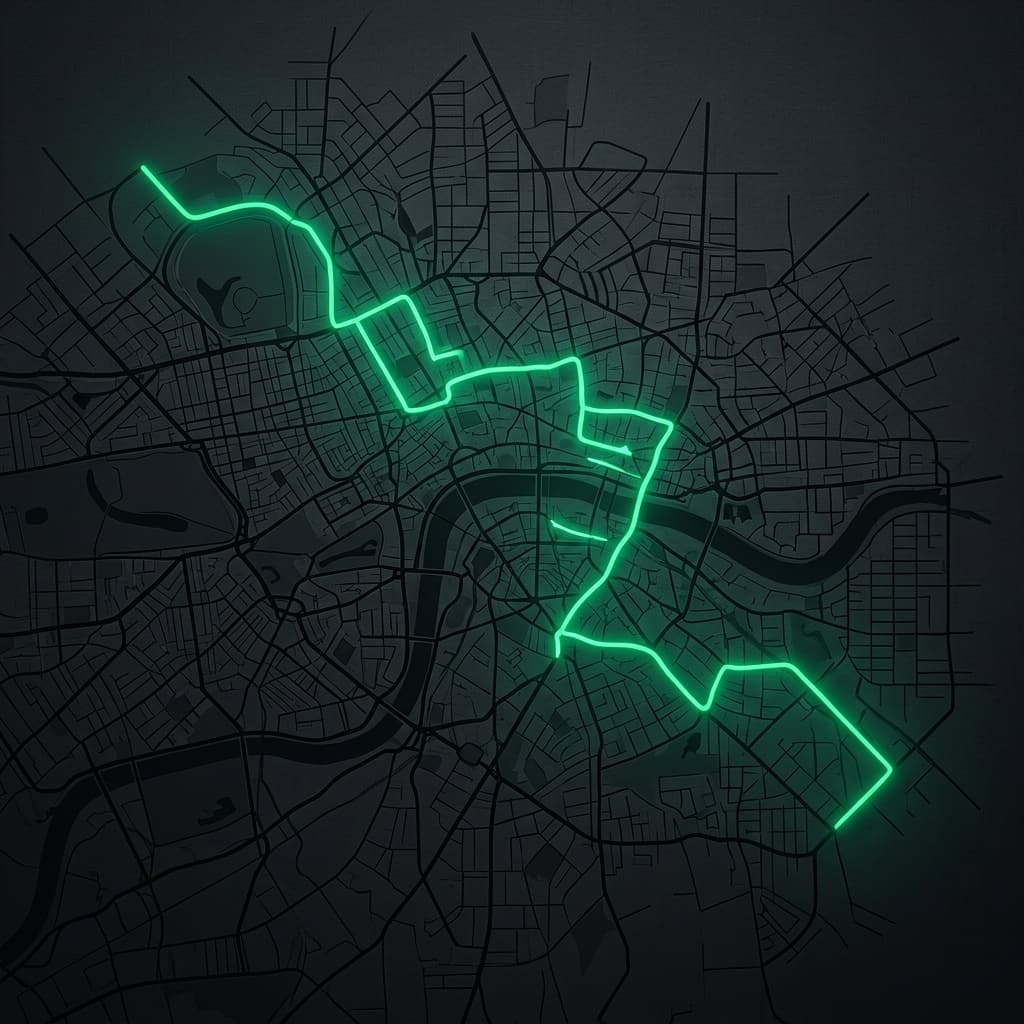
Instead of comparing who is fastest, we should make the act of showing up visible. When your daily run or walk lights up your neighborhood map, the reward is immediate and community-focused. You aren't competing with anyone; you are contributing to the active life of your city.
This is the design philosophy behind REVO. REVO is not a fitness tracker. We don't care about your pace, your VO2 max, or your heart rate. We care about making your effort visible to your local community.
When your neighborhood glows with activity, you feel a sense of belonging and accountability that no numerical chart can ever replicate.
Frequently Asked Questions
What are the main problems with fitness apps?
The main problems are their obsession with competitive metrics, which creates performance anxiety, and their reliance on digital badges that fail to build long-term, intrinsic habits.
Why does self-tracking lead to exercise burnout?
Self-tracking converts a recreational activity into a performance-evaluated task. This shift from intrinsic pleasure to external scoring often results in anxiety and loss of interest.
How does community visibility differ from traditional leaderboards?
Community visibility focuses on presence and collective consistency rather than individual speed or distance. It builds local connection and safety instead of competitive isolation.
Tired of performance anxiety? Join the REVO movement on our homepage and build consistency through community visibility.